The rules for posting are simple!

1. Every Friday post a photo that includes one or more flowers.
2. Please only post photos you have authority to use.
3. Include a link to this blog in your post - http://floralfridayfoto.blogspot.com/
4. Leave the link to your FloralFridayFoto post below on inlinkz.
5. Visit other blogs listed ... comment & enjoy!

When to Post:
inlinkz will be available every Thursday and will remain open until the next Wednesday.

Thursday, 27 October 2022

FFF566 - IRIS

Iris is a genus of about 300 species of flowering plants with showy flowers. It takes its name from the ancient Greek goddess of the rainbow, Iris, referring to the wide variety of flower colours found among the many species. As well as being the scientific name, iris is also very widely used as a common name for all Iris species, though some plants called thus belong to other closely related genera. A common name for some species is 'flags', while the plants of the subgenus Scorpiris are widely known as 'junos', particularly in horticulture.

Irises are popular garden flowers and their blossoms provide wonderful splashes of colour in the Spring garden. The genus is widely distributed throughout the north temperate zone. Their habitats are varied, ranging from cold and montane regions to the grassy slopes, meadowlands and riverbanks of Europe, the Middle East and northern Africa, Asia and across North America. Irises are perennial herbs, growing from creeping rhizomes (rhizomatous irises) or, in drier climates, from bulbs (bulbous irises).

They have long, erect flowering stems which may be simple or branched, solid or hollow, and flattened or have a circular cross-section. The rhizomatous species usually have 3–10 basal sword-shaped leaves growing in dense clumps. The bulbous species have cylindrical, basal leaves.

Join me for Floral Friday Fotos by linking your flower photos below, and please leave a comment once you have done so.
**If you take part in the meme, please show an active link back to this site on your own blog post!***

You are invited to the Inlinkz link party!

Click here to enter

Thursday, 20 October 2022

FFF565 - DOGWOOD

Cornus is a genus of about 30–60 species of woody plants in the family Cornaceae, commonly known as dogwoods, which can generally be distinguished by their blossoms, berries, and distinctive bark. Most are deciduous trees or shrubs, but a few species are nearly herbaceous perennial subshrubs, and a few of the woody species are evergreen. Several species have small heads of inconspicuous flowers surrounded by an involucre of large, typically white petal-like bracts, while others have more open clusters of petal-bearing flowers. 

The various species of dogwood are native throughout much of temperate and boreal Eurasia and North America, with China and Japan and the southeastern United States particularly rich in native species. Species include the common dogwood Cornus sanguinea of Eurasia, the widely cultivated flowering dogwood (Cornus florida) of eastern North America, the Pacific dogwood Cornus nuttallii of western North America, the Kousa dogwood Cornus kousa of eastern Asia, and two low-growing boreal species, the Canadian and Eurasian dwarf cornels (or bunchberries), Cornus canadensis and Cornus suecica respectively.

Depending on botanical interpretation, the dogwoods are variously divided into one to nine genera or subgenera.

Join me for Floral Friday Fotos by linking your flower photos below, and please leave a comment once you have done so.
**If you take part in the meme, please show an active link back to this site on your own blog post!***

You are invited to the Inlinkz link party!

Click here to enter

Thursday, 13 October 2022

FFF564 - ROSE GERANIUM

Pelargonium graveolens is an uncommon Pelargonium species native to the Cape Provinces and the Northern Provinces of South Africa, Zimbabwe and Mozambique. It is in the subgenus Pelargonium along with Pelargonium crispum, Pelargonium tomentosum and Pelargonium capitatum.

Pelargonium graveolens is an erect, multi-branched shrub, that grows up to 1.5 m and has a spread of 1 m. The leaves are deeply incised, velvety and soft to the touch (due to glandular hairs). The flowers vary from pale pink to almost white and the plant flowers from August to January. The leaves may be strongly rose-scented, although the leaf shape and scent vary. Some plants are very strongly scented and others have little or no scent. Some leaves are deeply incised and others less so, being slightly lobed like P. capitatum.

It makes for a lovely garden plant, is resistant to most stressors and the delicious fragrance can be used in the kitchen as a flavouring for cold drinks, tisanes and desserts.

Join me for Floral Friday Fotos by linking your flower photos below, and please leave a comment once you have done so!
****If you take part in the meme, please show an active link back to this site on your own blog post!****


You are invited to the Inlinkz link party!

Click here to enter

Thursday, 6 October 2022

FFF563 - PRIMULA

Primula beesiana, now treated as a subspecies of Primula bulleyana, is one of the species known as candelabra primroses. It is a tall Primula with purple-red flowers. Stems of Primula beesiana grow 50–60 cm high and flower in late spring or early summer. The flowers are fragrant and require diligent watering.

Primroses come in many shapes and sizes. The Candelabra group are grown for their colourful display of flowers arranged in tiers or layers on tall, upright stems. This species features heads of rose-purple flowers with a yellow eye. Foliage is light green, held in a low rosette at ground level. All Candelabra type primrose prefer a rich soil that is constantly moist, and dislike any hint of summer drought. A stream bank or pond side setting is ideal. Allow plants to self-sow. Will tolerate full sun in cool summer regions.

Join me for Floral Friday Fotos by linking your flower photos below, and please leave a comment once you have done so!
****If you take part in the meme, please show an active link back to this site on your own blog post!****

You are invited to the Inlinkz link party!

Click here to enter

Thursday, 29 September 2022

FFF562 - GIANT SPEAR LILY

Doryanthes is the sole genus in the flowering plant family Doryanthaceae. The genus consists of two species, D. excelsa and D. palmeri, both native to the coast of Eastern Australia. Plants grow in a rosette form, only flowering after more than 10 years. They enjoy a warm environment, good soil, and much water during the warmest time of the year.

The genus Doryanthes was first described in 1802 by the Portuguese priest, statesman, philosopher and botanist JosĂ© Francisco CorrĂȘa da Serra (1751–1823), a close friend of Joseph Banks. Doryanthes excelsa or "Gymea Lily", endemic to southern Sydney and the Illawarra. The family Doryanthaceae, placed in the order Asparagales of the monocots, has only recently been recognised by taxonomists. Formerly the genus was usually placed in the family Agavaceae.

Doryanthes palmeri (the Giant Spear Lily), shown here, grows in a rosette and the leaves can reach the length of about 3 m. The flowers arise in springtime on a stalk which may reach 5 m in height. A succulent herb, its leaves are hairless and grow in the shape of a sword. The Giant Spear Lily is listed as 'vulnerable' under the New South Wales Threatened Species Act (1995). Here it is seen growing in Melbourne's Fitzroy Gardens, close to the Conservatory.

Join me for Floral Friday Fotos by linking your flower photos below, and please leave a comment once you have done so!
****If you take part in the meme, please show an active link back to this site on your own blog post!****


You are invited to the Inlinkz link party!

Click here to enter

Thursday, 22 September 2022

FFF561 - TURNERA

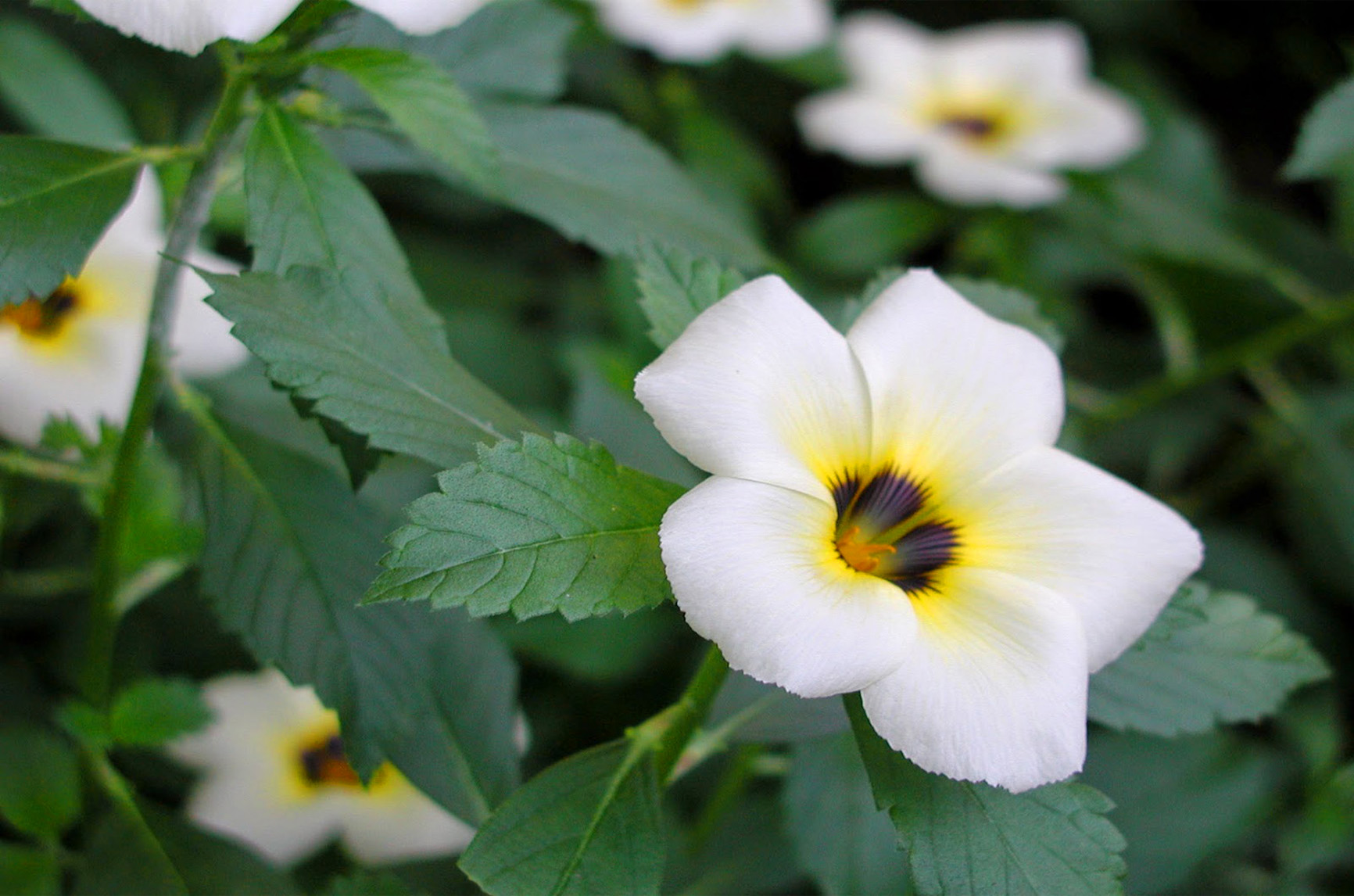
Turnera subulata is a species of flowering plant in the Passifloraceae family known by the common names white buttercup, sulphur alder, politician's flower, dark-eyed turnera, and white alder. Despite its names, it is not related to the buttercups or the alders. It is native to Central and South America, from Panama south to Brazil. It is well known in many other places as an introduced species, such as Malaysia, Indonesia, several other Pacific Islands, the Caribbean, and Florida in the United States. It is commonly cultivated as a garden flower.

This plant is a perennial herb growing from a thick taproot and woody stem base. It reaches a maximum height around 80 cm. The leaves are roughly oval in shape with toothed edges. The undersides are glandular and coated in white hairs. The upper surfaces may be somewhat hairy, as well. The leaves are up to 9 cm long. Flowers occur in the leaf axils, borne in calyces of hairy, glandular sepals. The petals are rounded to oval, the longest exceeding 3 cm. They are white or yellowish with darker bases. The dark patches at the bases are nectar guides. The centre of the flower is rough, said to feel like a cat's tongue.

The fruit is a hairy capsule containing seeds with white arils. The seeds are dispersed by ants, who are likely attracted to their high lipid content. This plant has uses in traditional medicine. It is used for skin, gastrointestinal, and respiratory ailments. In Brazil, the plant is made into cough syrup, and the roots are said to be good for dysmenorrhea. Laboratory tests showed it has some inhibitory activity against various fungi, such as Candida glabrata, Aspergillus flavus, A. niger, A. fumigatus, Penicillium chrysogenum, and Candida albicans.

Join me for Floral Friday Fotos by linking your flower photos below, and please leave a comment once you have done so!
****If you take part in the meme, please show an active link back to this site on your own blog post!****

You are invited to the Inlinkz link party!

Click here to enter

Thursday, 15 September 2022

FFF560 - CALLERY PEAR

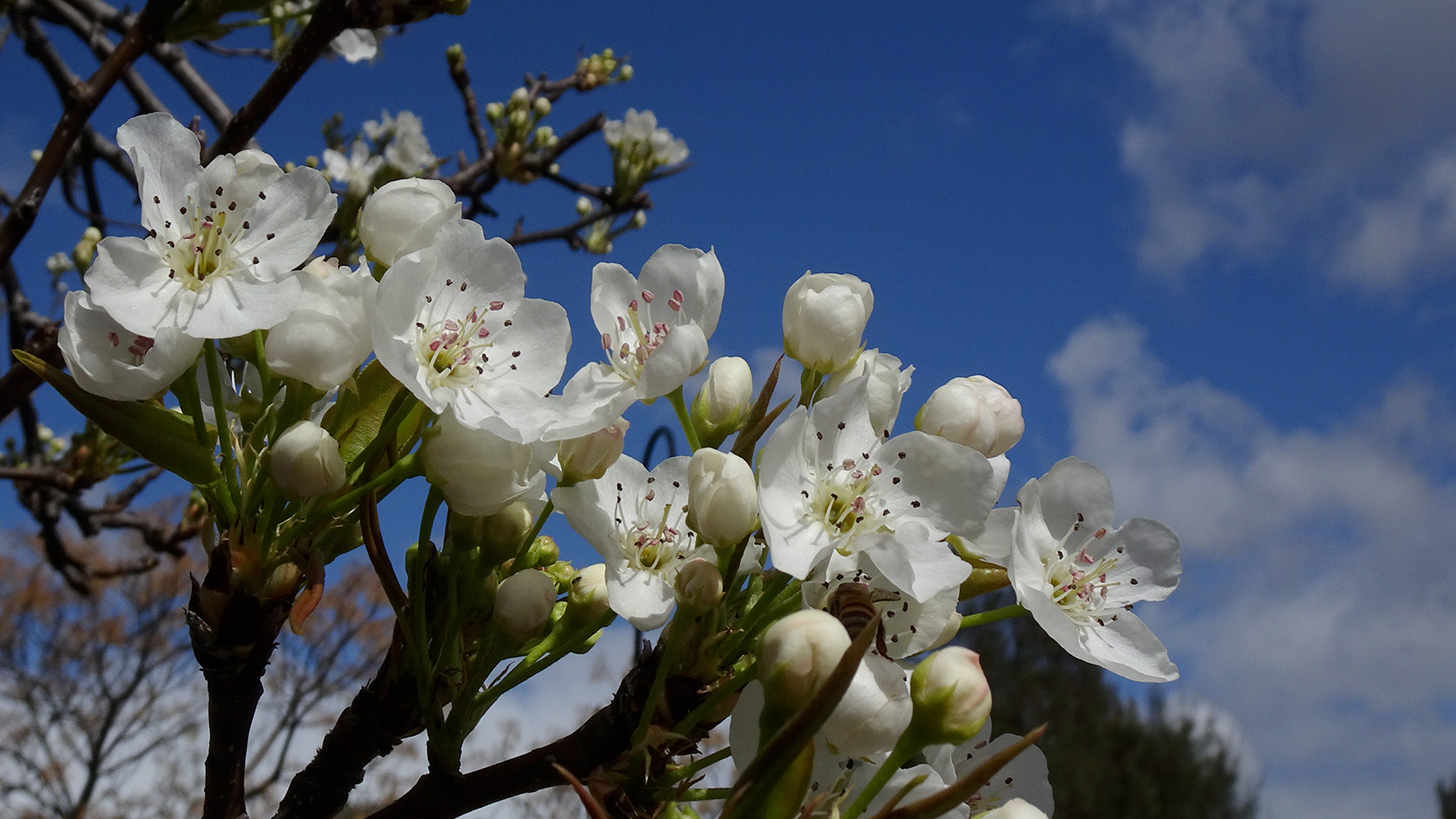
Pyrus calleryana, the Callery pear known in the USA as the Bradford Pear, is a species of pear native to China and Vietnam, in the family Rosaceae. It is a deciduous tree growing to 5 to 8 m tall, often with a conic to rounded crown. The leaves are oval, 4 to 8 cm long, glossy dark green above, and slightly paler below. 

The white, five-petaled flowers are about 2 to 2.5 cm in diameter. They are produced abundantly in early spring, before the leaves expand fully. The fruits of the Callery pear are small (less than one cm in diameter), and hard, almost woody, until softened by frost, after which they are readily taken by birds, which disperse the seeds in their droppings.

In summer, the foliage is dark green and very smooth, and in autumn the leaves commonly turn brilliant colours, ranging from yellow and orange to more commonly red, pink, purple, and bronze. Their dense clusters of white blossoms are conspicuous and very pretty in early spring, however their smell is commonly found unpleasant by many people (me included!). The smell is often described as 'fishy' and 'putrid'.

Join me for Floral Friday Fotos by linking your flower photos below, and please leave a comment once you have done so!
****If you take part in the meme, please show an active link back to this site on your own blog post!****


You are invited to the Inlinkz link party!

Click here to enter

Thursday, 8 September 2022

FFF559 - FOTHERGILLA

Fothergilla ‘Mount Airy’ is a hybrid Fothergilla cultivar that was discovered by plantsman Michael A. Dirr at the Mt. Airy Arboretum in Cincinnati, Ohio. This is a vigorous deciduous shrub that grows 1.5 m tall and is noted for its profuse spring flowering, excellent summer foliage, excellent Autumn colour and consistently upright habit.

Terminal, bottlebrush-like spikes (2-5 cm long) of tiny, fragrant, apetulous, white flowers bloom in mid- to late Spring after the foliage emerges. Flower colour comes from the dense clusters of showy stamens (white filaments and yellowish anthers). Flowers have a honey-scented fragrance. Leathery, ovate to obovate leaves (4-10 cm long) are dark green above and bluish-gray beneath.Foliage turns excellent shades of yellow, orange and red-purple in Autumn.

Genus name honours Dr. John Fothergill, 18th century English physician and early collector of American plants. ‘Mount Airy’ may be a cross between two southeastern U. S. natives, F. gardenii and F. major. It is taller than the former but shorter than the latter.

Join me for Floral Friday Fotos by linking your flower photos below, and please leave a comment once you have done so!
****If you take part in the meme, please show an active link back to this site on your own blog post!****

You are invited to the Inlinkz link party!

Click here to enter

Thursday, 1 September 2022

FFF558 - PURPLE-LEAF PLUM

Prunus cerasifera 'Atropurpurea' is a shrub to a small tree in the rose family that grows 15-25 feet tall and wide with a vase to a rounded shape. The reddish-purple leaves are the attraction to this plant along with the showy white to pink spring flowers, with a honey-like fragrance. The leaves maintain their colour most of the year. They are fairly short-lived and susceptible to insects and diseases. Twigs and fruit drop can be messy. Purpleleaf plum isn't picky about soil type or pH and is moderately drought tolerant once established. Leaf colour is best when grown in full sun.

The tree porduces 2 to 4 cm fleshy fruits, which are reddish-purple drupes. They are produced prolifically and are edible by wildlife and humans. They make excellent jam and can be pickled.

Join me for Floral Friday Fotos by linking your flower photos below, and please leave a comment once you have done so!
****If you take part in the meme, please show an active link back to this site on your own blog post!****

You are invited to the Inlinkz link party!

Click here to enter

Thursday, 25 August 2022

FFF557 - WINTER JASMINE

Jasminum nudiflorum, the winter jasmine, is a slender, deciduous shrub native to China (Gansu, Shaanxi, Sichuan, Xizang (Tibet), Yunnan). The flower's blossoming peaks right after winter, which is why it is also named Yingchun (èżŽæ˜„) in Chinese, which means "the flower that welcomes Spring". It is widely cultivated as an ornamental and is reportedly naturalized in France and in scattered locations in the United States (Texas, Oklahoma, Georgia, Tennessee, Maryland and New Jersey).

Jasminum nudiflorum is valued by gardeners as one of the few plants that are in flower during the winter months. It is frequently trained against a wall to provide extra warmth and shelter, but also lends itself to groundcover. It tolerates hard pruning and should be pruned in spring immediately after flowering; regular pruning will help to prevent bare patches. It can also be grown as a bonsai and is very tolerant of the wiring methods. It likes full sun or partial shade and is hardy. It has gained the Royal Horticultural Society's Award of Garden Merit. It can be propagated using the layering technique.

Join me for Floral Friday Fotos by linking your flower photos below, and please leave a comment once you have done so!
****If you take part in the meme, please show an active link back to this site on your own blog post!****


You are invited to the Inlinkz link party!

Click here to enter