The rules for posting are simple!

1. Every Friday post a photo that includes one or more flowers.
2. Please only post photos you have authority to use.
3. Include a link to this blog in your post - http://floralfridayfoto.blogspot.com/
4. Leave the link to your FloralFridayFoto post below on inlinkz.
5. Visit other blogs listed ... comment & enjoy!

When to Post:
inlinkz will be available every Thursday and will remain open until the next Wednesday.

Thursday, 21 July 2022

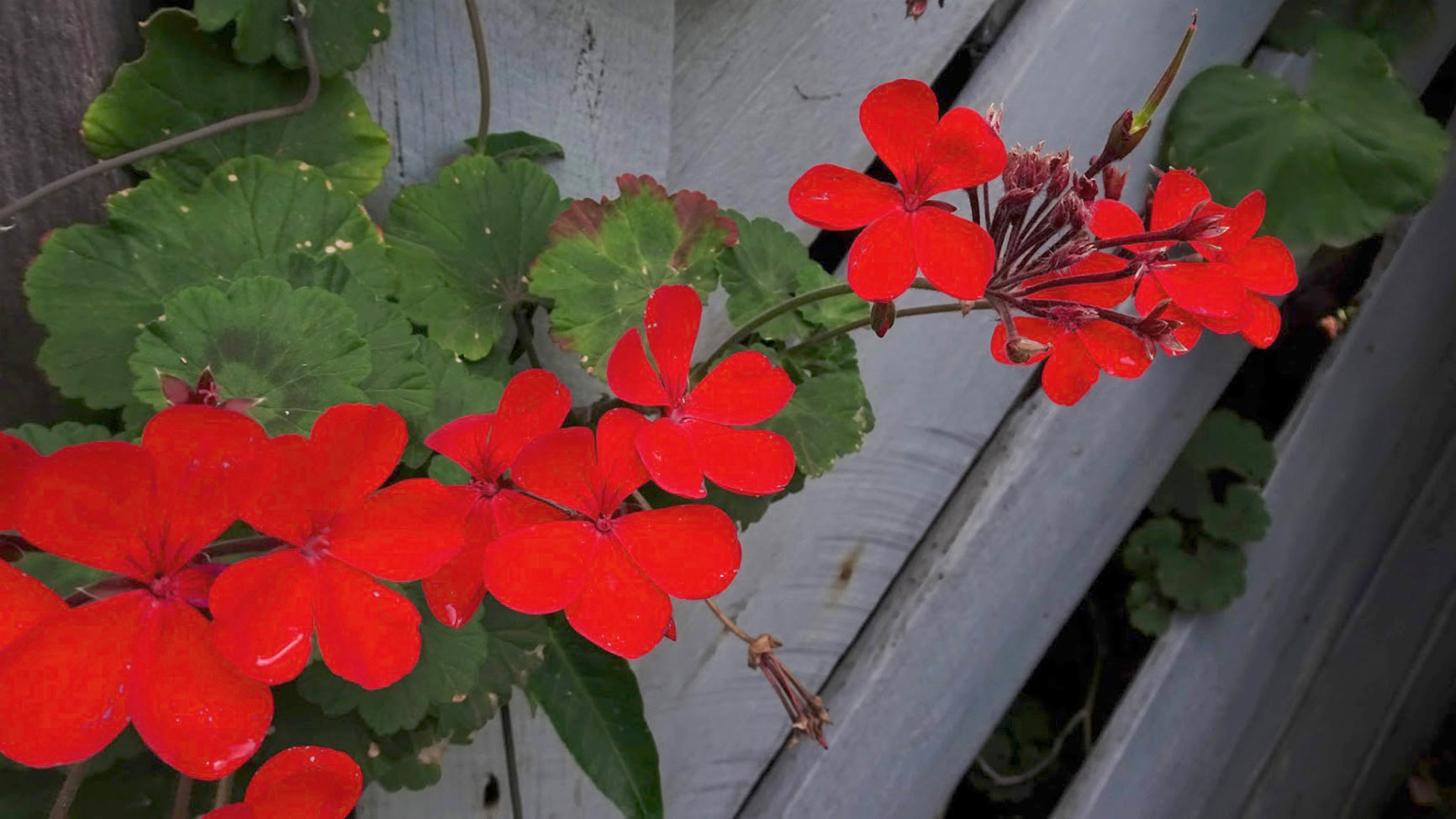
FFF552 - RED GERANIUM

Pelargonium x garden is also known as the common geranium, zonal geranium or bedding geranium and is a common species in the Geraniaceae Family. This species of geranium is most commonly used as an ornamental plant. Hybrids include the usual nursery "seed-grown" and the "cutting grown", which can easily be grown at home by cutting and planting side branches.

Join me for Floral Friday Fotos by linking your flower photos below, and please leave a comment once you have done so.

You are invited to the Inlinkz link party!

Click here to enter

Thursday, 14 July 2022

FFF552 - CAMELLIA

Camellia is a genus of flowering plants in the family Theaceae. They are found in eastern and southern Asia, from the Himalayas east to Japan and Indonesia. There are 100–250 described species, with some controversy over the exact number. The genus was named by Linnaeus after the Jesuit botanist Georg Joseph Kamel, who worked in the Philippines, though he never described a camellia. This genus is famous throughout East Asia; camellias are known as cháhuā (茶花) in Chinese, "tea flower", an apt designation, as tsubaki (椿) in Japanese, as dongbaek-kkot (동백꽃) in Korean and as hoa trà or hoa chè in Vietnamese.

Of economic importance in the Indian subcontinent and Asia, leaves of C. sinensis are processed to create the popular beverage, tea. The ornamental Camellia japonica, Camellia oleifera and Camellia sasanqua and their hybrids are represented in cultivation by a large number of cultivars.

Join me for Floral Friday Fotos by linking your flower photos below, and please leave a comment once you have done so.


You are invited to the Inlinkz link party!

Click here to enter

Thursday, 30 June 2022

FFF551 - EURYOPS

Euryops chrysanthemoides (with the common names African bush daisy or bull's-eye) is a small shrub native to Southern Africa that is also grown as a horticultural specimen in tropical to subtropical regions around the world. It occurs in the Eastern Cape, along the coast and inland, to KwaZulu-Natal, Mpumalanga and Swaziland. It is usually found on forest edges, in riverine bush and in ravines, as well as in coastal scrub, grassland and disturbed areas.

It is a compact, densely branched, leafy, evergreen shrub, 0.5 to 2m in height. The species was moved to Euryops from the genus Gamolepis on the basis of chromosome counts. It is a ruderal weed in New South Wales, although it is not weedy in all places where it is cultivated or has naturalised.

Join me for Floral Friday Fotos by linking your flower photos below, and please leave a comment once you have done so! If you link your post here, please show a link back to this site on your blog post.


You are invited to the Inlinkz link party!

Click here to enter

Thursday, 23 June 2022

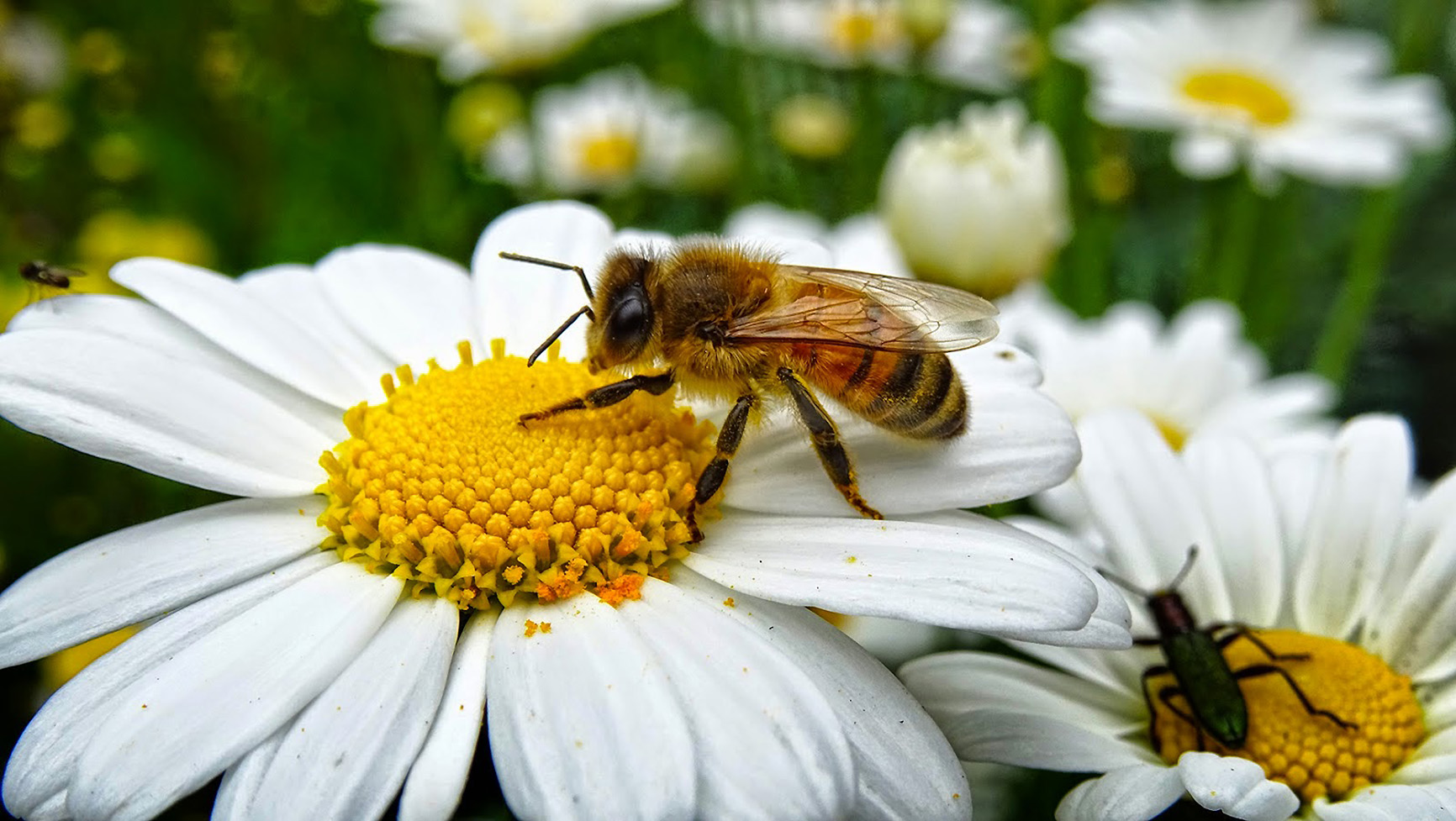
FFF550 - BEE AND DAISY

A bee feasting on a Shasta daisy, Leucanthemum × superbum. The Shasta daisy, is a commonly grown flowering herbaceous perennial plant with the classic daisy appearance of white petals (ray florets) around a yellow disc, similar to the oxeye daisy Leucanthemum vulgare (Lam), but larger.

It originated as a hybrid produced in 1890 by the American horticulturist Luther Burbank from a number of daisies. First, he crossed Leucanthemum vulgare with Leucanthemum maximum; this double hybrid was itself crossed with Leucanthemum lacustre. The resulting Leucanthemum triple hybrid was crossed with Nipponanthemum nipponicum, creating an intergeneric cross of species from three continents.

It was named after Mount Shasta, because its petals were the colour of the snow. Some members of the genus are considered noxious weeds, but the Shasta daisy remains a favourite garden plant.

Join me for Floral Friday Fotos by linking your flower photos below, and please leave a comment once you have done so! If you link your post here, please show a link back to this site on your blog post.

You are invited to the Inlinkz link party!

Click here to enter

Thursday, 16 June 2022

FFF549 - CELOSIA

Celosia is a small genus of edible and ornamental plants in the amaranth family, Amaranthaceae. The generic name is derived from the Greek word κηλος (kelos), meaning "burned," and refers to the flame-like flower heads. Species are commonly known as woolflowers, or, if the flower heads are crested by fasciation, cockscombs. The plants are well known in East Africa’s highlands and are used under their Swahili name, mfungu.

Celosia 'Intenz' (Celosia caracus) seen here, has a vibrant magenta colour on spiky blooms and sought-after texture to add to mixed containers. 'Intenz' is also versatile, able to be planted in patio pots, landscapes or used as a pot plant indoors. It performs well in full-sun with a long flowering time for home gardeners. It is a low-maintenance plant with high appeal.

Join me for Floral Friday Fotos by linking your flower photos below, and please leave a comment once you have done so! If you link your post here, please show a link back to this site on your blog post.


You are invited to the Inlinkz link party!

Click here to enter

Thursday, 9 June 2022

FFF548 - BIRTHDAY BOUQUET

They are from the North, but wonderful roses they are nevertheless: Offered in our Southern Winter, their message is quite clear: Red for love, pink for joy and white for secrecy... 
Thank you!

Join me for Floral Friday Fotos by linking your flower photos below, and please leave a comment once you have done so! If you link your post here, please show a link back to this site on your blog post.


You are invited to the Inlinkz link party!

Click here to enter

Thursday, 2 June 2022

FFF547 - ECHEVERIA

Echeveria is a large genus of flowering plants in the Crassulaceae family, native to semi-desert areas of Central America, Mexico and northwestern South America. The genus is named after the 18th century Mexican botanical artist Atanasio Echeverría y Godoy.

Plants may be evergreen or deciduous. Flowers on short stalks (cymes) arise from compact rosettes of succulent fleshy, often brightly coloured leaves. Species are polycarpic, meaning that they may flower and set seed many times over the course of their lifetimes. Often numerous offsets are produced, and are commonly known as "hen and chicks", which can also refer to other genera, such as Sempervivum, that are significantly different from Echeveria.

Many Echeveria species are popular as ornamental garden plants. They are drought-resistant, although they do better with regular deep watering and fertilising. Most will tolerate shade and some frost, although hybrids tend to be less tolerant. Most lose their lower leaves in winter; as a result, after a few years, the plants lose their attractive, compact appearance and need to be re-rooted or propagated. In addition, if not removed, the shed leaves may decay, harbouring fungus that can then infect the plant. They can be propagated easily by separating offsets, but also by leaf cuttings, and by seed if they are not hybrids.

Join me for Floral Friday Fotos by linking your flower photos below, and please leave a comment once you have done so! If you link your post here, please show a link back to this site on your blog post.


You are invited to the Inlinkz link party!

Click here to enter

Thursday, 26 May 2022

FFF546 - TECOMA

Tecoma capensis (common name Cape honeysuckle) is a species of flowering plant in the family Bignoniaceae, native to southern Africa. Despite its common name, it is not closely related to the true honeysuckle. Synonyms include Bignonia capensis, Tecomaria capensis and Tecoma petersii. An erect, scrambling shrub, it grows to 2–3 m in height and a similar width. Normally evergreen, it may lose its leaves in colder climates. In certain habitats it may scramble, meaning that it shoots out long growth tips which lean on the stems and branches of other plants, as well as boulders, trellises, fences and walls; this can lead to the plant appearing untidy.

The leaves are up to 15 cm long. They are opposite, slightly serrated, green to dark-green, and pinnate with 5 to 9 oblong leaflets. The flowers are tubular, narrow, about 7.5 cm long, and are produced at different times throughout the year. They are grouped in 10–15 cm long terminal clusters. The flower colour ranges from orange to orange-red to apricot.

The species occurs naturally in South Africa, Swaziland and southern Mozambique. It is cultivated in other areas of the world, such as in South-east Asia, Australia, Hawaii and California. It can be considered invasive in remote islands such as the Azores (as seen at the island of São Miguel, near Ponta Garça).

Tecoma capensis has been in cultivation for many years and is often used for hedging, as it is a scrambling shrub. It can be propagated from cuttings or by removing rooted suckers during the active growth phase. It can be planted in semi-shade to full sun. In cold areas young plants should be protected from frost. To keep this shrub clean and tidy, it must be pruned back in late winter to promote new growth and flowers. The application of a balanced fertilizer after pruning will enhance the growth and flowering. This plant has gained the Royal Horticultural Society's Award of Garden Merit.

Join me for Floral Friday Fotos by linking your flower photos below, and please leave a comment once you have done so! If you link your post here, please show a link back to this site on your blog post...

You are invited to the Inlinkz link party!

Click here to enter

Thursday, 19 May 2022

FFF545 - LEUCADENDRON

Leucadendron salignum is the most widespread species of the family Proteaceae, occurring in a large part of South Africa. It is common from Port Elizabeth in the east, to north of Ceres in the west. It occurs on a wide range of soil types, from sea level to an altitude of 2000 m and is quite variable in leaf size as well as leaf- and bract colour.

Leucadendrons are dioecious, i.e. separate male and female plants. This is unusual in the protea family. Its long flowering season (May - Dec), coupled with colourful leaves and bracts surrounding the flowers, make this species an attractive garden plant. Leucadendron salignum is a multi-stemmed shrub with a persistent rootstock, which enables it to resprout after fire. In its natural conditions it grows to a height of 0.75 to 2 m.

The variability of growing conditions, from mild winter temperatures to snow and frost near mountain tops, as well as the variability of leaves and bracts, from greenish-yellow to vivid orange-red, have made this species an excellent candidate for hybridisation. In addition, this species adapts well to vigorous pruning, which makes it suitable for the production of cut foliage on a large scale. These characteristics have made the species a natural choice for the wild flower industry.

There are a range of plants in cultivation, which differ markedly from the usual parent species, most often in growth form, leaf- and bract colour and flowering time. They may be either selections, known as 'cultivars' or hybrids, i.e. 'crosses' between species. Many hybrids and cultivars have been produced in South Africa, New Zealand, Australia and other countries growing Proteaceae. The hybrid illustrated is 'Royal Ruby'.

Join me for Floral Friday Fotos by linking your flower photos below, and please leave a comment once you have done so! If you link your post here, please show a link back to this site on your blog post...


You are invited to the Inlinkz link party!

Click here to enter

Thursday, 12 May 2022

FFF544 - CHRYSANTHEMUM HYBRID

Chrysanthemums, sometimes called mums or chrysanths, are flowering plants of the genus Chrysanthemum in the family Asteraceae. They are native to Asia and northeastern Europe. Most species originate from East Asia and the centre of diversity is in China. There are countless horticultural varieties and cultivars.

Modern cultivated chrysanthemums are showier than their wild relatives. The flower heads occur in various forms, and can be daisy-like or decorative, like pompons or buttons. This genus contains many hybrids and thousands of cultivars developed for horticultural purposes. In addition to the traditional yellow, other colours are available, such as white, purple, and red. The most important hybrid is Chrysanthemum × morifolium (syn. C. × grandiflorum), derived primarily from C. indicum, but also involving other species.

Over 140 varieties of chrysanthemum have gained the Royal Horticultural Society's Award of Garden Merit.

Join me for Floral Friday Fotos by linking your flower photos below, and please leave a comment once you have done so!
If you link your post here, please show a link back to this site on your blog post...


You are invited to the Inlinkz link party!

Click here to enter