The rules for posting are simple!
2. Please only post photos you have authority to use.
3. Include a link to this blog in your post - http://floralfridayfoto.blogspot.com/
4. Leave the link to your FloralFridayFoto post below on inlinkz.
5. Visit other blogs listed ... comment & enjoy!
When to Post:
inlinkz will be available every Thursday and will remain open until the next Wednesday.
Thursday, 27 January 2022
FFF528 - STRAWFLOWERS
Thursday, 20 January 2022
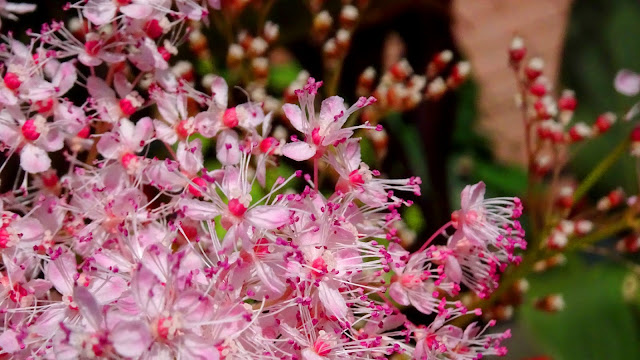
FFF527 - ASTILBE
Astilbe chinensis, commonly known as false goat's beard, tall false-buck's-beard or Chinese astilbe, is a plant in the saxifrage family, Saxifragaceae. It is a herbaceous plant with alternate, pinnately compound leaves, on thin stems. The flowers are purplish-pink, borne in summer.
Chinese astilbe is prized for its attractive foliage, plume-like inflorescence in the summer, and dried seed heads afterwards. In 1902, the Journal of the Royal Horticultural Society described it as "the most important hardy perennial introduced during the past few years". Chinese astilbe is usually planted in woodland gardens and shaded parts of herbaceous borders or cottage gardens as groundcover or edging plant.
The plant requires partial to full shade, and grows best in soil which is well-drained and rich in organic material. While more tolerant of drought and exposure to direct sunlight than its congeners, the soil must never dry out. Generally resistant to pathogens and herbivores, most problems are caused by high temperatures and drought.
The variety shown here is the hybrid Astilbe chinensis, "purpurkerze".
You are invited to the Inlinkz link party!
Click here to enterThursday, 13 January 2022
FFF526 - BLUE CONVOLVULUS
Convolvulus Blue (Convolvulus sabatius) is a super vigorous, non invasive, easy to grow ground cover that covers those difficult to maintain places. The violet blue flowers appear in early spring and continue until early autumn.
It is native to the Mediterranean region and suitable for a full sun to part shade position in well drained soil, requiring little water once established. Suitable as a spillover plant ground cover plant hanging baskets and coastal gardens.
Join me for Floral Friday Fotos by linking your flower photos below, and please leave a comment once you have done so. If you take part in the meme, please show an active link back to this site on your own blog post!
You are invited to the Inlinkz link party!
Click here to enterThursday, 6 January 2022
FFF526 - COMMON EVERLASTING
You are invited to the Inlinkz link party!
Click here to enterThursday, 30 December 2021
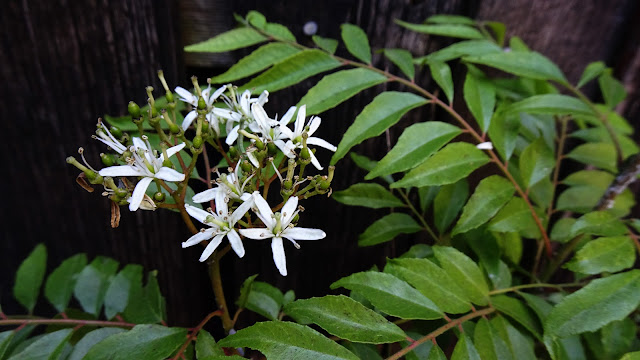
FFF525 - CURRY TREE
The curry tree, Murraya koenigii or Bergera koenigii, is a tropical to sub-tropical tree in the family Rutaceae (the rue family, which includes rue, citrus, and satinwood), and is native to Asia. The plant is also sometimes called sweet neem, though M. koenigii is in a different family to neem, Azadirachta indica, which is in the related family Meliaceae. Its leaves, known as curry leaves, are used in many dishes in the Indian subcontinent.
You are invited to the Inlinkz link party!
Click here to enterThursday, 23 December 2021
FFF524 - CHRISTMAS LILY
You are invited to the Inlinkz link party!
Click here to enterThursday, 16 December 2021
FFF523 - KNAUTIA
You are invited to the Inlinkz link party!
Click here to enterThursday, 9 December 2021
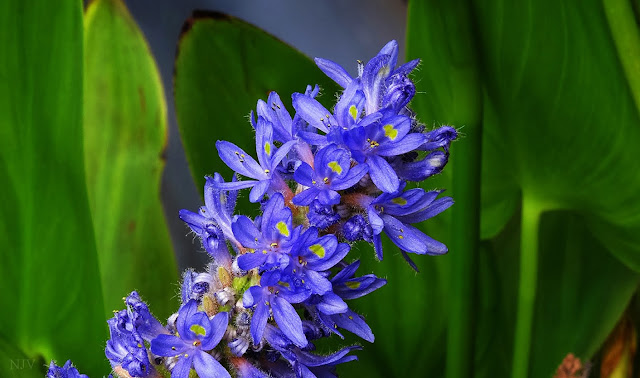
FFF522 - PONTEDERIA
You are invited to the Inlinkz link party!
Click here to enterThursday, 2 December 2021
FFF521 - SPOTTED SUN ORCHID
Thelymitra ixioides, known as the Spotted Sun Orchid is a common plant in eastern and southern Australia, it is also found in New Zealand and New Caledonia. Leaves are thin or lanceolate, up to 20 cm long. A small plant of the Orchidaceae family, it has spotted flowers, forming from August to January. They are usually blue, but sometimes violet. It grows in eucalyptus woodland or heathland.
Thelymitra is derived from the Greek thely, female and mitra, a headdress, referring to the appearance of the plumed column (the fused stamens, styles and stigma). The specific name ixioides means similar to the genus Ixia. It is known as the "sun orchid" because the flowers of most species only open fully on warm, sunny days. There are about 80 species of terrestrial orchids in the genus Thelymitra.
As T. ixioides has fairly specialised cultural needs (like most terrestrial orchids) it is cultivated mainly by orchid enthusiasts. Generally the plants are grown in pots in a freely draining, sandy mix. They require good air circulation in a protected position of about 50% sun during the growing period from autumn to spring. During this growing period the plants must not be allowed to dry out. After the leaves have turned brown in late spring to early summer the pots are allowed to dry out completely. Repotting of tubers can be carried out in summer. This orchid is not considered to be at risk in the wild.
Join me for Floral Friday Fotos by linking your flower photos below, and please leave a comment once you have done so. If you take part in the meme, please show an active link back to this site on your own blog post!
Join me for Floral Friday Fotos by linking your flower photos below, and please leave a comment once you have done so.
If you take part in the meme, please show an active link back to this site on your own blog post!
You are invited to the Inlinkz link party!
Click here to enterThursday, 25 November 2021
FFF520 - SALVIA
You are invited to the Inlinkz link party!
Click here to enter