The rules for posting are simple!
2. Please only post photos you have authority to use.
3. Include a link to this blog in your post - http://floralfridayfoto.blogspot.com/
4. Leave the link to your FloralFridayFoto post below on inlinkz.
5. Visit other blogs listed ... comment & enjoy!
When to Post:
inlinkz will be available every Thursday and will remain open until the next Wednesday.
Thursday, 25 April 2024
FFF644 - ROSA "PEACE" FOR ANZAC DAY
Thursday, 26 October 2023
FFF618 - CONEFLOWER
You are invited to the Inlinkz link party!
Click here to enterThursday, 23 March 2023
FFF587 - IXIA
The genus Ixia consists of a number of cormous plants native to South Africa from the Iridaceae family and Ixioideae subfamily. Some of them are known as the corn lily. Some distinctive traits include sword-like leaves and long wiry stems with star-shaped flowers. The plants usually prefer well-drained soil. The popular corn lily has specific, not very intense fragrance. It is often visited by many insects such as bees. The Ixia are also used as ornamental plants and cut flowers.
Ixia viridiflora, also known as "Turquoise Ixia", is a tall member of the genus Ixia. It comes from around the Tulbagh in South Africa, Cape Province. It has small corms under the ground. This corn lily is a very rare plant. Its habitats are often destroyed by human influence so the conservation status of this interesting flower is vulnerable and is tending to worse.
The plant gets the name "Turquoise Ixia" from the really spectacular blue-green turquoise colour of the flowers, which is a rare colour for flowers. They are grouped in long inflorescences and are traditionally star-shaped like in most corn lilies. They have a black-purple centre. The ovary is 3-locular. This flower is pollinated by specific scarab beetles known as monkey beetles of the tribe Hopliini. The Turquoise Ixia has very good ornamental traits with its beautiful inflorescences but is very rare in cultivation because of its conservation status.
You are invited to the Inlinkz link party!
Click here to enterThursday, 2 March 2023
FFF584 - LOBELIA
You are invited to the Inlinkz link party!
Click here to enterThursday, 16 February 2023
FFF582 - MORNING GLORY
You are invited to the Inlinkz link party!
Click here to enterThursday, 15 December 2022
FFF573 - LILIUM
Lilium Eyeliner (Lilium hybrid) is a LA Hybrid lilium that produces pure white blooms with dark spotting. LA Hybrids are a combination of both the Asiatic & Longiflorum Lilium and produce a larger Asiatic style flower with the added stem length of the Longiflorum. Stem length is approximately 90cm tall and usually produce 4-5 blooms per stem. Bulbs will flower approximately 15 weeks after planting. Protection from strong winds is recommended. Prefers a full sun position and a well drained soil; also ideal for large pots and containers.

You are invited to the Inlinkz link party!
Click here to enterThursday, 18 August 2022
FFF556 - NARCISSUS
You are invited to the Inlinkz link party!
Click here to enterThursday, 11 August 2022
FFF555 - SCABIOUS
Scabiosa is a genus in the teasel Family Dipsacaceae of flowering plants. Many of the species in this genus have common names that include the word scabious; however some plants commonly known as scabious are currently classified in related genera such as Knautia and Succisa; at least some of these were formerly placed in Scabiosa. Another common name for members of this genus is pincushion flowers.
Members of this genus are native to Europe and Asia. Some species of Scabiosa, notably small scabious (S. columbaria) and Mediterranean sweet scabious (S. atropurpurea) have been developed into cultivars for gardeners. Illustrated here is the Scabiosa columbaria cultivar 'Pink Mist'.
Scabiosa plants have many small flowers of soft lavender blue, lilac or creamy white colour borne in a single head on a tall stalk. Scabious flowers are nectar rich and attract a variety of insects including moths and butterflies such as the Six-spot Burnet. Scabiosa species are also used as food plants by the larvae of some Lepidoptera species including Grey Pug.
You are invited to the Inlinkz link party!
Click here to enterThursday, 28 July 2022
FFF553 - GERBERAS
You are invited to the Inlinkz link party!
Click here to enterThursday, 21 July 2022
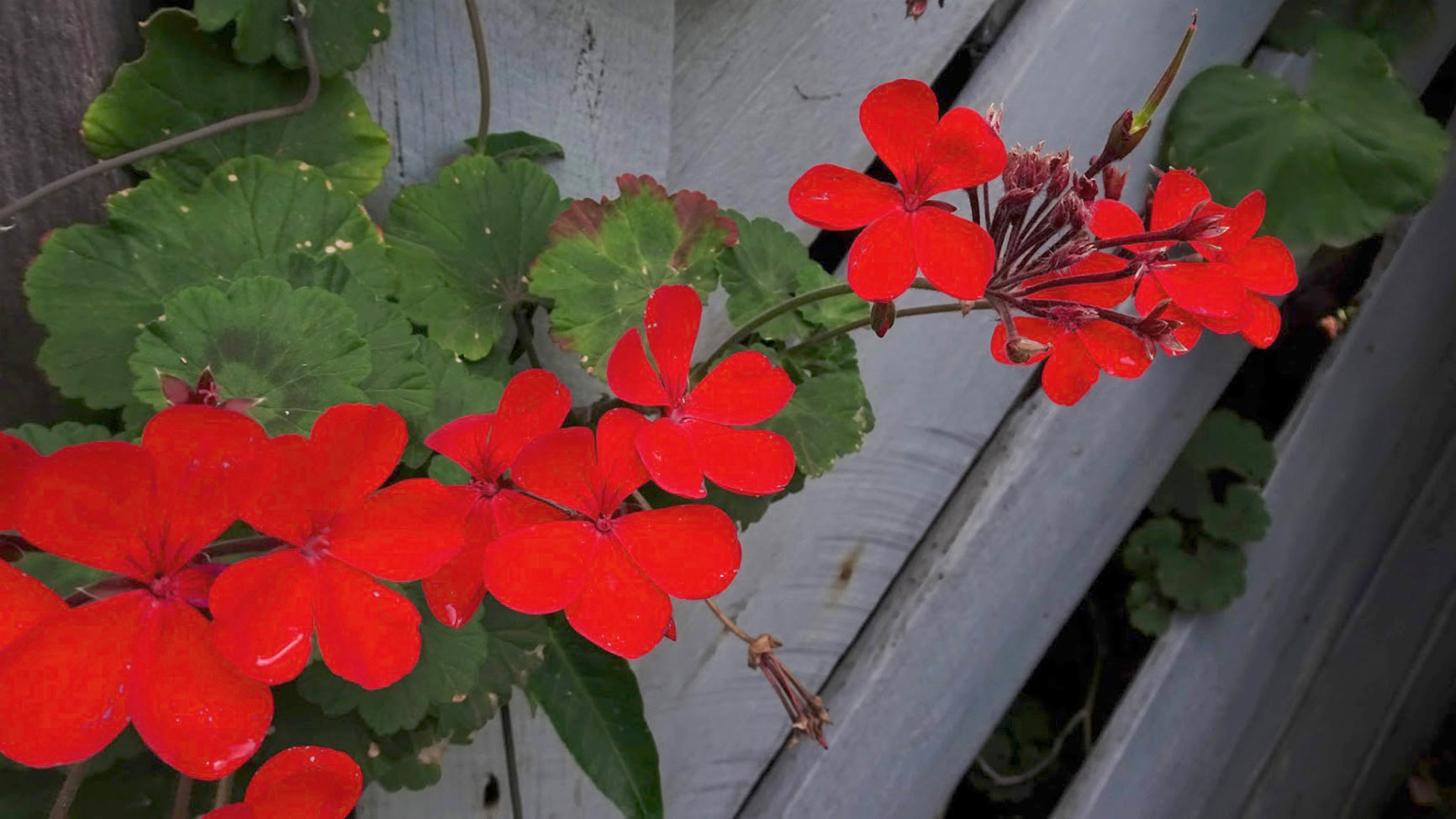
FFF552 - RED GERANIUM
You are invited to the Inlinkz link party!
Click here to enterThursday, 12 May 2022
FFF544 - CHRYSANTHEMUM HYBRID
You are invited to the Inlinkz link party!
Click here to enterThursday, 2 September 2021
FFF508 - SPRING BOUQUET
You are invited to the Inlinkz link party!
Click here to enterThursday, 19 August 2021
FFF506 - ERYNGIUM
You are invited to the Inlinkz link party!
Click here to enterThursday, 5 August 2021
FFF504 - ALOES
You are invited to the Inlinkz link party!
Click here to enterThursday, 29 July 2021
FFF503 - BLACK CORAL PEA
Kennedia nigricans (Black Kennedia or Black Coral Pea) is a species of flowering plant in the family Fabaceae, endemic to the south-west of Western Australia. It is a vigorous climber which can spread up to 6 metres in diameter or 4 metres in height and has dark green leaflets that are about 15 cm long. Distinctive black and yellow pea flowers are produced between July and November in its native range.
The species was first formally described as Kennedya nigricans by John Lindley in 1835 in Edward's Botanical Register, where it was also labelled as Dingy Flowered Kennedya. A cultivar known as Kennedia nigricans 'Minstrel' was registered with the Australian Cultivar Registration Authority by Goldup Nursery of Mount Evelyn, Victoria in September 1985. This cultivar was selected from a batch of seedlings in 1983 and has a pale colouration instead of the yellow, which appears almost white.
This plant is noted for its vigour and can be used to cover embankments or unsightly structures. The species is adapted to a range of soils and prefers a sunny position. It is resistant to drought and has some frost tolerance. The species can be propagated by scarified seed or cuttings of semi-mature growth, while the cultivar requires propagation from cuttings to remain true to type.
You are invited to the Inlinkz link party!
Click here to enterThursday, 24 June 2021
FFF498 - JONQUILS
Narcissus jonquilla (Jonquil, Rush daffodil) is a bulbous flowering plant, a species of Narcissus (daffodil) that is native to southwestern Europe and northern Africa, but has naturalised throughout Europe and the United States. It bears long, narrow, rush-like leaves (hence the name "jonquil", Spanish junquillo, from the Latin juncus = "rush"). It is in the Amaryllidaceae family of plants.
In Spring it bears heads of up to 5 scented yellow or white flowers. It is a parent of numerous varieties within Division 7 of the horticultural classification. Division 7 in the Royal Horticultural Society classification of Narcissus includes N. jonquilla and N. apodanthus hybrids and cultivars that show clear characteristics of those two species. N. jonquilla has been cultivated since the 18th century in France as the strongest of the Narcissus species used in Narcissus Oil, a component of many modern perfumes.
Like other members of their family, narcissi produce a number of different alkaloids, which provide some protection for the plant, but may be poisonous if accidentally ingested. This property has been exploited for medicinal use in traditional healing and has resulted in the production of galantamine for the treatment of Alzheimer's dementia. We are seeing all sorts of narcissi blooming in Melbourne at the moment.
This post is part of the Floral Friday Fotos meme.
You are invited to the Inlinkz link party!
Click here to enterThursday, 12 November 2020
FFF467 - VERVAIN
Verbena rigida, known as slender vervain or tuberous vervain, is a flowering herbaceous perennial plant in the family Verbenaceae. It is native to Brazil and Argentina, and is not fully hardy in temperate climates, where consequently it is grown from seed as an annual.
Growing to 60 centimetres, it has a spreading habit, with stalkless toothed leaves and bright purple or magenta, scented flowers in summer. Numerous cultivars have been selected for garden use. The species has gained the Royal Horticultural Society's Award of Garden Merit.
You are invited to the Inlinkz link party!
Click here to enterThursday, 6 February 2020
FFF427 - FUCHSIA GUM
You are invited to the Inlinkz link party!
Click here to enterThursday, 26 September 2019
FFF408 - POLYANTHUS
You are invited to the Inlinkz link party!
Click here to enter